Local Landcare Associations (LCA)
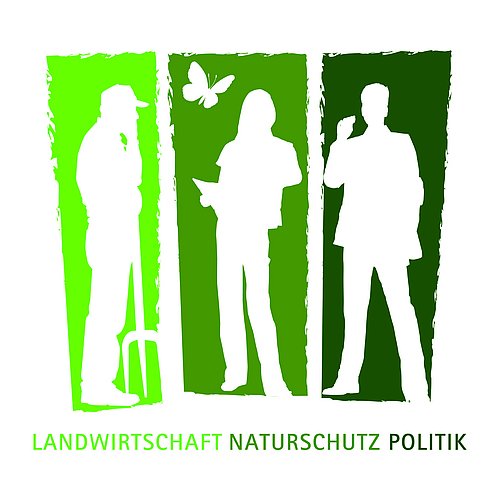
LCAs are associations in which land users, nature conservationists and local politicians work together to maintain or create near-natural landscape areas.
The three social groups work together on an equal footing on the boards of the Local Landcare Associations. This so-called "one-third parity" of agriculture, nature conservation and politics creates trust and promotes the practical success of the work. Local Landcare Associations are well networked regionally and work together with owners and land managers on a voluntary basis.
In 2009, the German Bundestag anchored Local Landcare Associations as preferred implementation bodies for nature conservation and landcare in § 3 of the Bundesnaturschutzgesetz.
Although Local Landcare Associations are active throughout Germany, the associations, which are organized on the “one-third parity”, do not bear the same name everywhere.
While the organizations represented in umbrella organisation Landcare Germany in Bavaria, Brandenburg, Berlin, Hesse, Mecklenburg-Western Pomerania, Saxony and Saxony-Anhalt are usually referred to as "Landschaftspflegeverbände" (landcare associations), they are called "Landschaftserhaltungsverbände" (Landscape conservation associations) in Baden-Württemberg, for example, "biological stations" in North Rhine-Westphalia and "local actions" in Schleswig-Holstein. The decisive factor in these Local Landcare Associations is always the equal representation on the boards of the associations as well as the equal, voluntary and joint action of the board members.
Advantages of Local Landcare Associations
Local Landcare Associations are instruments for the implementation of nature conservation measures and regional development.
They are contact persons and service providers
- for the implementation of Natura 2000 and management plans as well as the Water Framework Directive,
- for mitigation and compensation measures, eco-accounts; they organize high-quality implementation and provide long-term support,
- for the care and development of small watercourses or for the maintenance of field hedges,
- for the acquisition of project funds, also outside the classical landscape management, for example EU projects, foundations,
- for the implementation of existing plans, for example landscape plans, in the municipalities,
- for strengthening regional economic cycles through regional initiatives.
Methodology
As non-profit registered associations, Local Landcare Associations have no official powers. They become active at the request of property owners such as municipalities, private individuals or associations. Voluntary action opens many doors more quickly than sovereign action and often sets competition in environmentally friendly action in motion. This requires intensive consulting and support, even beyond the point of implementation.
No two landscapes are alike.Each habitat type needs its own concept. Therefore, Local Landcare Associations are also autonomous and independent associations that set their own priorities. They are usually responsible for the territory of a district or natural area. This decentralized organization respects regional characteristics and improves the chance to preserve individual landscapes. The trend toward standardization of the spatial structure should make way for more regional diversity.
Local Landcare Associations have three core goals. They want to:
- establish a nationwide network of natural and near-natural habitats in order to keep the foundations of life intact in all German cultural landscapes,
- to provide impulses for sustainable regional development and environmentally compatible land use that bring out what is special about the individual regions and awaken their inherent strengths,
- provide agriculture with a reliable additional income in nature conservation and support it in marketing products typical of the region.
The office
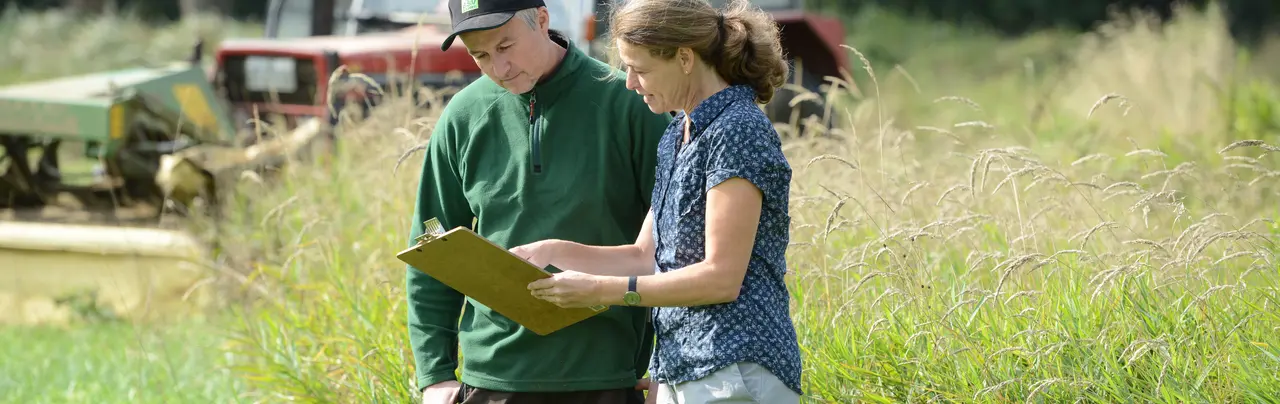
The office of the respective Local Landcare Association works as a kind of service provider for municipalities, districts, private property owners and local nature conservation associations. On the basis of existing specialized planning, the employees assess areas in detail, develop proposals and concepts, and calculate the costs. Close coordination with the authorities concerned, such as the administrations in the fields of nature conservation, agriculture, forestry or water management and the nature conservation associations, is a matter of course.
The practical work is usually carried out by local farms. They plant hedges, mow wet meadows or maintain oligotrophic grasslands. They are familiar with the landscape and feel responsible for "their" areas. Larger new biotope installations are often taken over by gardening and landscaping companies. The office of the Local Landcare Association handles all technical and organizational work: It applies for subsidies and takes care of the accounting. It is also responsible for monitoring the ecological success of the project.
one-third parity